Janet Brice explores six spa retreats where landscape, conservation and lower-impact operations are part of the experience—from Queensland rainforest and Costa Rican thermal water to Cornwall’s Atlantic cliffs.
Editor’s shortlist
- Australia: Gwinganna Retreat & Spa and Daintree Ecolodge
- Costa Rica: Tabacón Thermal Resort & Spa
- South Africa: Karkloof Safari Spa
- Malaysia: The Chateau Spa & Wellness Resort
- UK: The Scarlet, Cornwall
- How we assessed them: current operating evidence plus specific, publicly described environmental practices—not “green” branding alone.
Originally reported by Janet Brice; current planning and sustainability details have been checked and updated by The Spa Traveller.
Gwinganna Retreat & Spa, Queensland
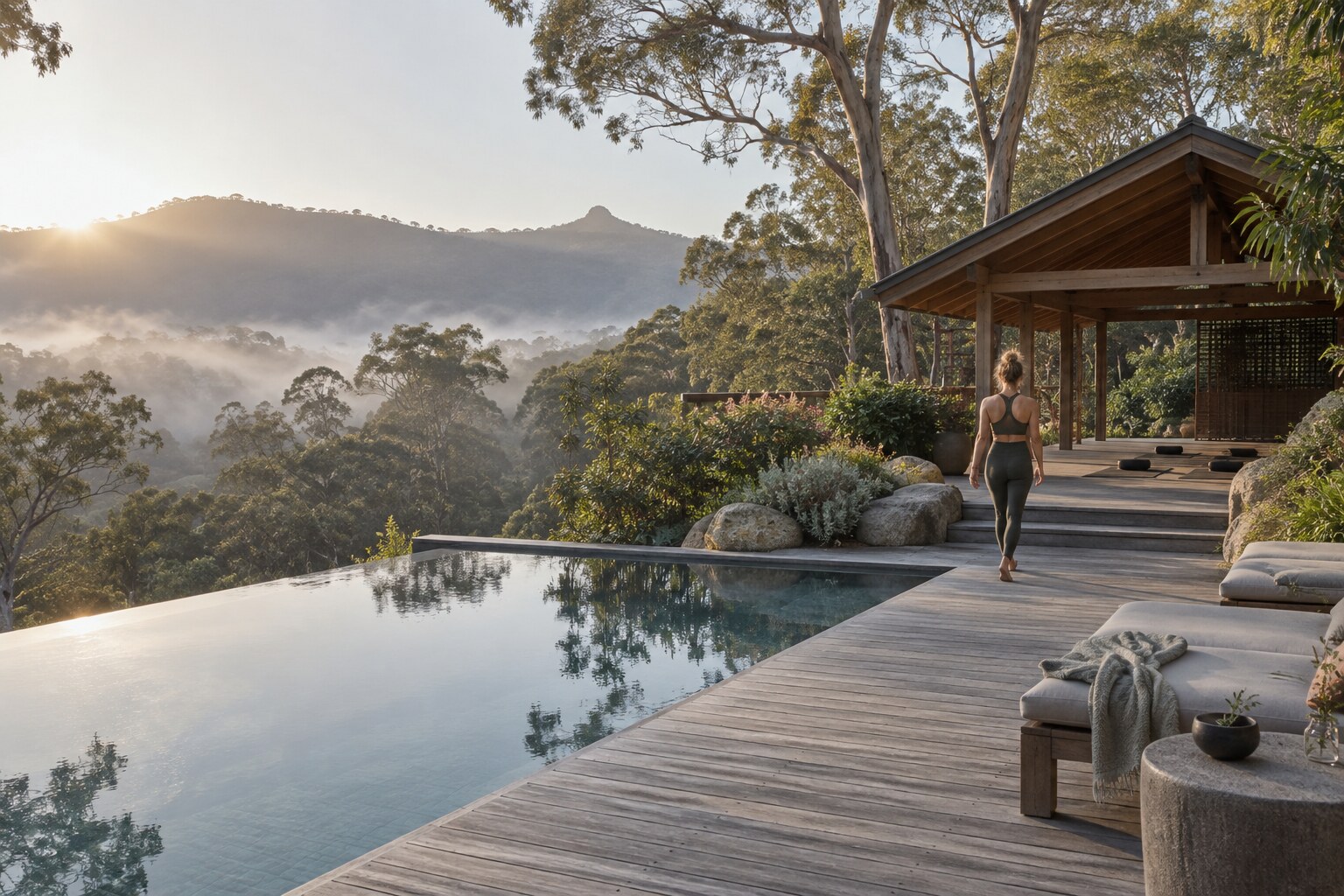
Gwinganna occupies more than 200 hectares in Tallebudgera Valley, combining a structured retreat programme with organic gardens, walking trails and protected habitat. The property says it has held Ecotourism Certification since 2009 and participates in Land for Wildlife, while its kitchens use produce from onsite gardens where practical.
The attraction is not simply a list of treatments. Days are shaped around movement, rest, time outdoors and the rhythm of the retreat programme. Travellers should compare programme dates and intensity rather than assuming every stay follows the same timetable.
Read Gwinganna’s current environmental commitments
Tabacón Thermal Resort & Spa, Costa Rica
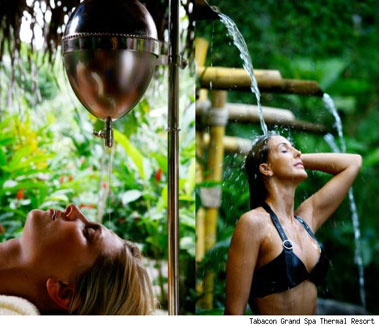
At the foot of Arenal Volcano, Tabacón’s defining experience is naturally heated thermal water moving through a landscaped rainforest setting. Its open-air spa and treatment bungalows make water and vegetation feel integral rather than decorative.
Tabacón’s current sustainability programme covers more than 570 acres of protected reserve, reforestation, biodiversity monitoring, energy efficiency and community partnerships. The resort also publishes an annual sustainability report, giving travellers something more concrete to examine than a broad eco-luxury claim.
Read Tabacón’s sustainability programme
Daintree Ecolodge, Queensland

Elevated rainforest accommodation and a small spa place guests inside the World Heritage-listed Daintree landscape. The lodge describes its approach as guided by Eastern Kuku Yalanji culture and conservation, with partnerships that support rainforest restoration and local artists.
Current measures include renewable electricity through onsite solar and GreenPower, wastewater treatment for irrigation, refillable amenities, removal of single-use plastics from guest areas and independently framed climate targets through parent company Intrepid Travel. Those specifics make it easier for guests to assess the claim.
Explore Daintree Ecolodge’s published impact work
Karkloof Safari Spa, KwaZulu-Natal
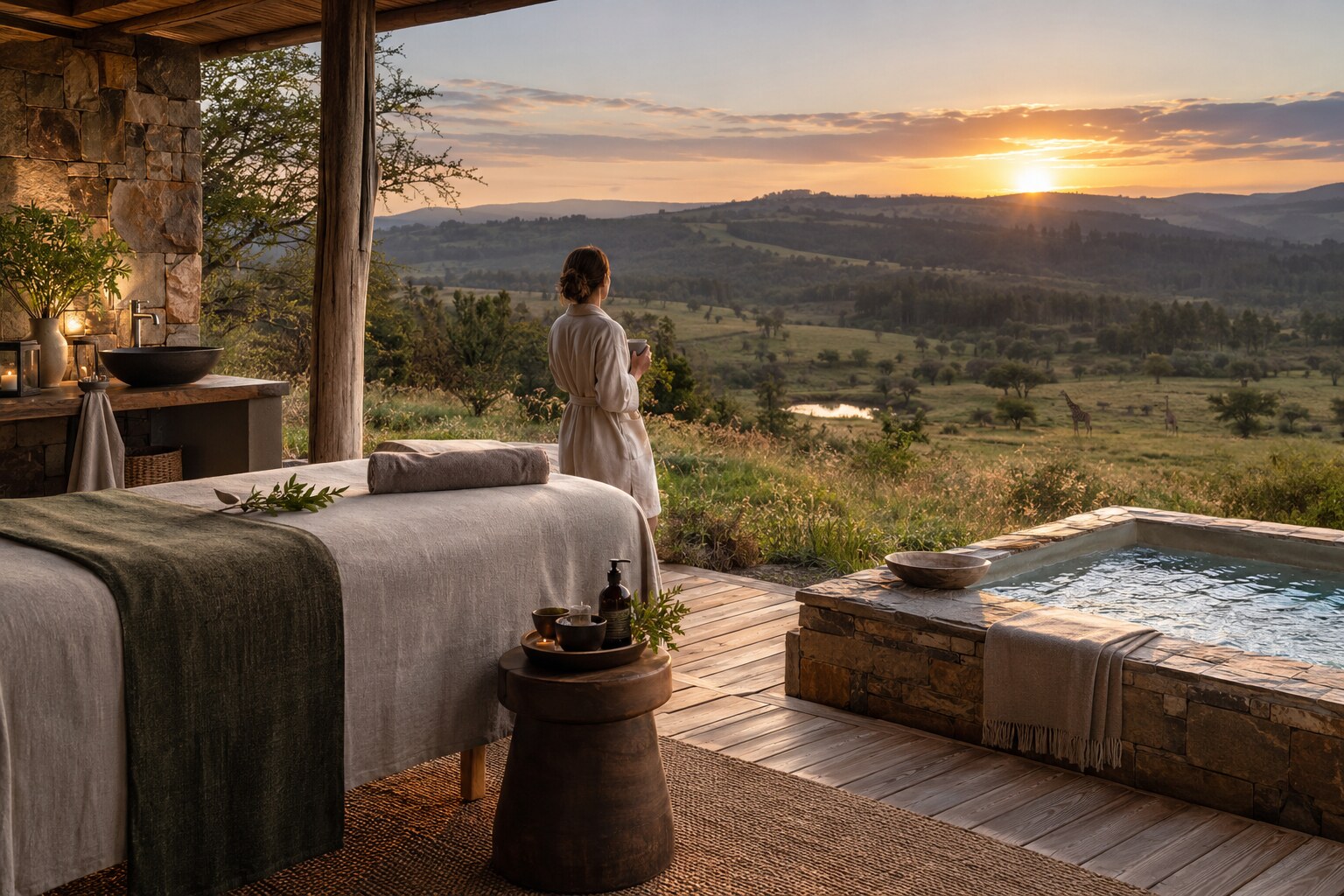
Karkloof combines wildlife-rich countryside with an extensive destination-spa offer. Treatment and relaxation spaces look across the landscape, creating a distinctive contrast between safari setting and hydrotherapy-led downtime.
The legacy story highlighted living roofs, grey-water systems and biodegradable spa products. Those details should be confirmed directly before travel because operational practices change; the property is currently publishing 2026 spa and stay packages, confirming that the resort remains active.
Check current Karkloof information
The Chateau Spa & Wellness Resort, Malaysia
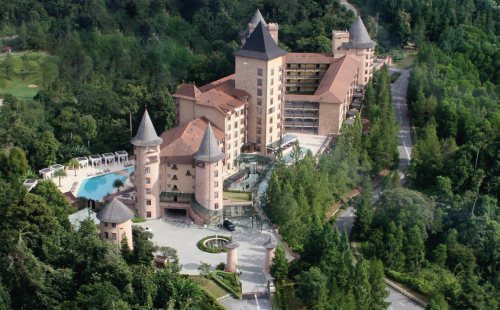
Set in the hills of Pahang, The Chateau combines European-inspired architecture with a rainforest setting and a wellness programme that has historically emphasised organic food and spa rituals. Its thermal-style facilities have included salt, herbal-heat and mud experiences, though the exact operating menu should be checked before booking.
Recent reporting describes a 1.21-hectare organic farm producing vegetables for the resort. As with any sustainability claim, guests should ask how much is grown onsite, what is independently certified and how energy, water and waste are measured.
Check The Chateau’s current resort information
The Scarlet, Cornwall
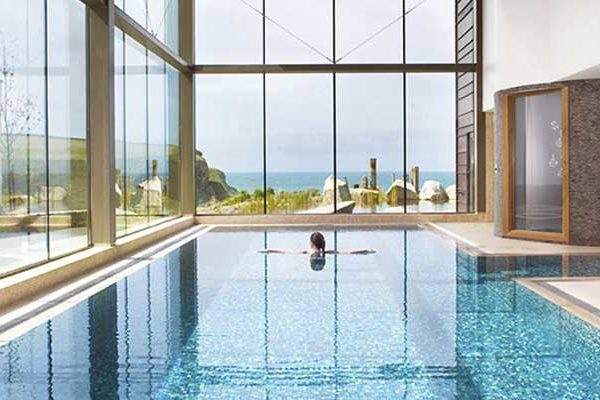
The Scarlet is an adults-only cliff-top hotel and spa at Mawgan Porth, where Atlantic views, Ayurvedic-inspired treatments and outdoor bathing shape the stay. Its reed-filtered natural pool and living sea-thrift roofs make the environmental design visible to guests.
The hotel’s current sustainability information describes 100% renewable electricity, no air conditioning, recyclable building materials, refillable or lower-waste guest products and locally focused food sourcing. Its spa uses organic, cruelty-free products and offers water-conscious treatments.
Read The Scarlet’s current environmental approach
An eco-spa claim becomes meaningful when a property shows what it measures, protects, powers differently or gives back to its community.
The Spa Traveller
How to assess an eco-spa
- Look for named third-party certification and check what it actually covers.
- Prefer current impact or sustainability reports with dates and measurable actions.
- Ask how the property manages energy, water, wastewater, laundry and food waste.
- Check whether local culture is represented through genuine partnership and payment.
- Consider how you will reach the property; long-distance travel can outweigh small onsite savings.
- Treat “organic”, “natural”, “detox” and “regenerative” as claims that need definition, not automatic proof.
Frequently asked questions
What is an eco-friendly spa?
There is no single universal definition. Useful evidence includes independent certification, renewable energy, credible water and waste management, biodiversity protection, responsible sourcing and transparent reporting.
Does an eco label guarantee a low-impact holiday?
No. Certification scope varies, and transport, length of stay and guest behaviour also affect impact. Read the underlying criteria and current report rather than relying on a badge alone.
Are natural spa products always more sustainable?
No. Ingredients, farming, processing, packaging, transport and disposal all matter. “Natural” does not automatically mean safer or lower impact.
How can I avoid greenwashing?
Look for dates, numbers, third-party standards and named projects. Be cautious when a property uses broad environmental language without explaining what changed or how progress is measured.
Conclusion: choose evidence over atmosphere
Rainforest, thermal water and ocean views can make a spa feel close to nature, but scenery alone is not sustainability. The strongest choices connect the guest experience to specific operating practices and publish enough detail for travellers to judge progress.
Spa profiles in this edit
Compare the eco-spa profiles
Plan a more considered spa escape
Use Find a Spa to compare settings and facilities, then check current stays through our clearly marked travel partner.
Affiliate disclosure: The Spa Traveller independently creates its editorial guidance. We may earn a commission if you book through the clearly marked Expedia link, at no additional cost to you. Always confirm current sustainability claims, facilities, prices and booking terms directly.