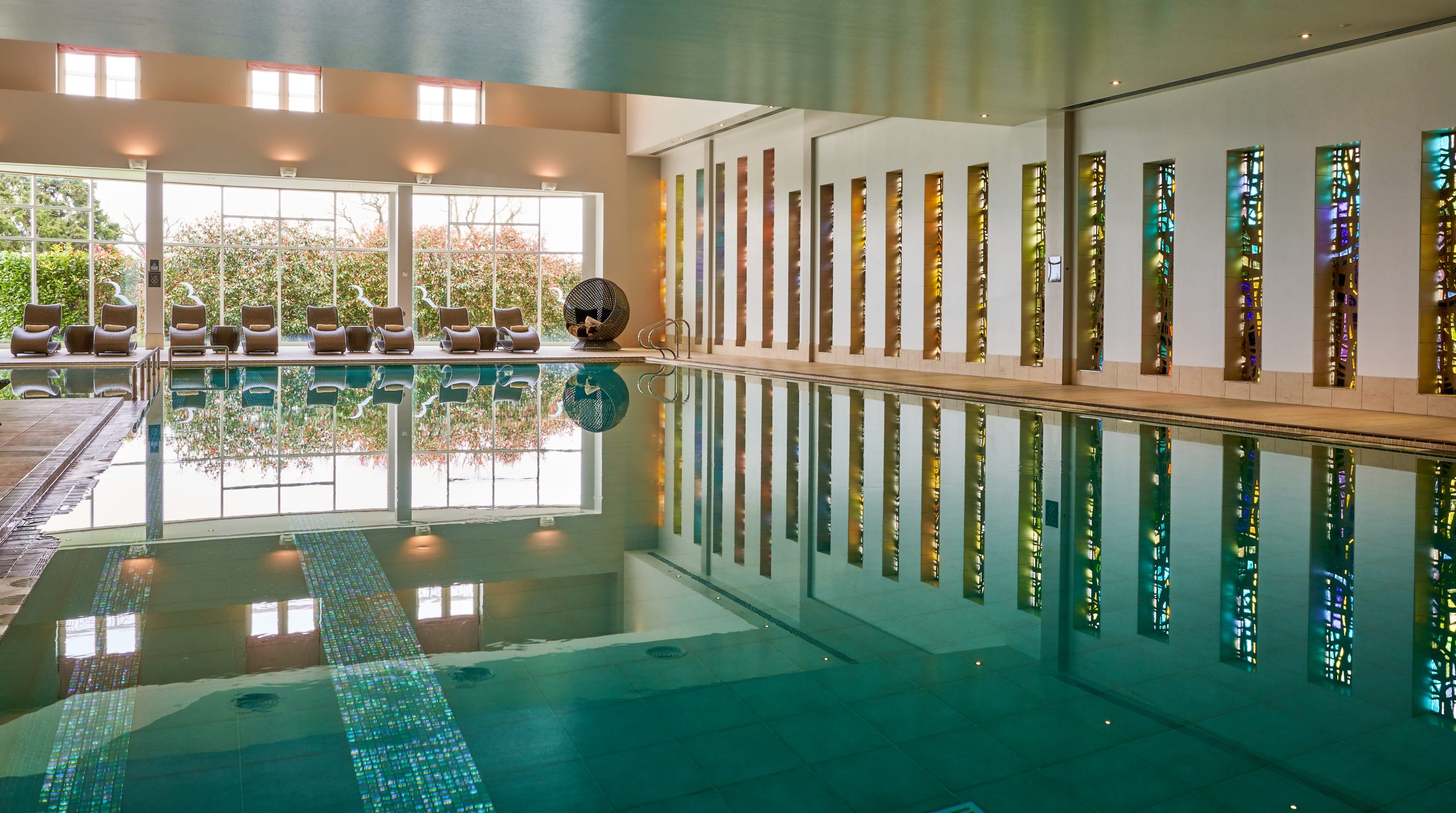
Rockliffe Hall near Darlington is one of the North East’s strongest Spa & Golf combinations: a 50,000-square-foot spa and wellness environment sits alongside a Hawtree-designed championship course that can stretch to 7,879 yards from the back tees. The resort is in the middle of a major 2026 transformation, but the spa, golf course and Clubhouse remain central to the proposition — giving couples and mixed-interest groups enough depth on both sides of the stay.
Spa & golf card
Location: Hurworth-on-Tees, near Darlington, County Durham
Best for: Spa & Golf couples, serious golfers, active recovery, spa days and longer North East stays
Spa scale: approximately 50,000 sq ft
Current spa highlights: 20-metre indoor pool, therapeutic hydropool, outdoor hot tub, Spa Garden infinity-edge pool, six thermal/cold suites, Mud Rasul and Technogym fitness
Treatment rooms: 11 in the post-renovation spa plan
Treatment partners: current menu includes Rockliffe signature treatments, [ comfort zone ] and NEOM
Golf: 18-hole Hawtree championship course, par 72, up to 7,879 yards from the Gold tees
Practice: eight covered TrackMan bays, practice greens, short-game area and PGA tuition
Important 2026 note: bunker-renovation work is ongoing and Rockliffe advises that individual holes can be affected on a day-to-day basis.
Why Rockliffe works for Spa & Golf
Rockliffe Hall has a particularly clear dual-benefit proposition because neither the golf course nor the spa feels secondary. The course is long enough from the back tees to test elite players, yet five tee positions on every hole allow ordinary club golfers to choose a more enjoyable challenge. The spa has enough water, thermal and treatment space to fill a full day even if a guest never sets foot on the golf course.
That balance is important for couples. One guest can play 18 holes and use the TrackMan practice facilities while another spends the day moving between the pool, thermal suites, Spa Garden and treatment rooms. Both still share the wider estate, dining and accommodation afterwards. Rockliffe even offers membership structures that explicitly pair golf for one partner with spa access for another, which illustrates how central the mixed-interest model is to the resort.
The spa and wellness facilities
The current spa facilities include a 20-metre swimming pool and a therapeutic hydropool, allowing guests to choose between proper swimming and slower water-based relaxation. The Spa Garden adds an outdoor infinity-edge pool with views across the estate, while an outdoor hot tub and relaxation spaces extend the experience beyond the main indoor pool hall.
Rockliffe’s thermal offer is one of the stronger parts of the spa. The resort describes six different thermal and cold suites, with experiences including an igloo, salt steam, Roman-style sauna and other heat/cooling environments. Experience showers, foot spas and outdoor drench features add further contrast. The Mud Rasul provides a self-administered ritual using scrub, mud and steam for guests who want something more interactive than a conventional therapist-led appointment.
The gym uses Technogym Artis, Skill Line and Kinesis equipment, with cardio, resistance and functional training options. That is particularly useful for golfers who want to keep recovery active rather than simply moving from the course to a hot tub. A short mobility session, gentle swim and normal meal can often be more useful than trying to force multiple recovery modalities into the evening.
Treatments and the 2026 spa refresh
Rockliffe Hall is in the middle of a substantial 2026 transformation. The resort’s current post-renovation information describes 11 treatment rooms and a treatment menu bringing together Rockliffe signature therapies with [ comfort zone ] and NEOM. Spa-day and spa-break availability has been phased around the renovation period, so guests should check live operating arrangements rather than relying on older descriptions of the property.
The spa advises guests to arrive around 30 minutes before treatment time and operates specific age policies. Treatments are available from age 16, with under-18s accompanied by an adult. The hydropool, heat rooms and Spa Garden are restricted to over-16s, while children may use the main pool during defined family swim windows.
For golf recovery, treatment timing matters. A stronger massage after the final round can be useful if you know your body responds well to it; before an important round, choose an intensity that will not leave you temporarily sore or over-relaxed. Guests with injuries, medication, pregnancy, cardiovascular conditions or other relevant health concerns should discuss suitability with the spa team and an appropriate professional rather than assuming every heat, cold or treatment experience is suitable.
Golf at Rockliffe Hall
The championship course was designed by Hawtree and opened in 2009. Rockliffe’s current investment information describes three lakes, five wetland areas, 78 bunkers and five tee positions on every hole. The Gold tees stretch to 7,879 yards, while a recent 2026 Northern Golf Masters was played from Black tees at 7,231 yards. The course therefore has genuine championship scale, but the multi-tee setup makes it much more flexible for everyday resort golf.
Practice facilities are excellent for a hotel course. Eight covered range bays use TrackMan technology, and there are dedicated practice greens and a short-game area. The Rockliffe Academy offers PGA tuition, while the Pro Shop, halfway house, equipment hire and Clubhouse complete the golf infrastructure.
The key current caveat is renovation. Rockliffe is investing in bunker and course work and explicitly advises golfers that holes in play can be affected or altered on a daily basis. If the championship setup is important to your trip, contact the Pro Shop shortly before travel for the latest course-condition information.
Rockliffe Hall course card
Designer: Hawtree
Opened: 2009
Holes: 18
Par: 72
Gold tees: 7,879 yards
Black tees: 7,231 yards used for the 2026 Northern Golf Masters
Hazards: three lakes, five wetland areas and extensive bunkering
Greens: USGA-spec creeping bent greens
Tee choice: five positions on every hole
Signature hole: the island-green par-three 5th
Practice: eight covered TrackMan bays, practice greens and short-game area.
Hole-by-hole: Rockliffe playing notes
- 1st — par 4: The fairway is generous enough to make a positive opening swing, but water waits right and pot bunkers guard the green. Prioritise finding grass from the tee, then take enough club to carry the front protection.
- 2nd — par 3: An undulating green surrounded by bunkers makes centre-green distance control the sensible target. Do not chase a marginal flag when a two-putt par is available from the safer section.
- 3rd — par 5: The tee shot is tighter than it first appears, with bunkers shaping the right side. A controlled drive sets up the hole; for most golfers, plan the second as a positional lay-up rather than forcing a long approach into a protected green.
- 4th — par 4: The tee shot must carry water but cannot simply be blasted through the landing area because bunkers wait beyond. Choose a club that clears the hazard comfortably and leaves a controlled approach between sand left and water right.
- 5th — par 3: The island green is Rockliffe’s visual signature. Commit to the measured carry and aim for the correct half of the green rather than the flag. Staying below the hole leaves the more manageable putt.
- 6th — par 4: A slight dogleg right with bunkers shaping both sides of the driving zone. Position is more valuable than maximum length; a fairway ball leaves a mid-iron into a comparatively generous target.
- 7th — par 5: One of the long tests. The fairway is guarded from the tee, but the lay-up area is more forgiving. Most golfers should treat it as three disciplined shots and leave the final approach at a comfortable wedge number.
- 8th — par 4: Water and bunkering narrow the full-driver landing area. Laying back short of the fairway traps can be the percentage play because it still leaves a realistic approach while taking the major tee-shot trouble out of play.
- 9th — par 4: The fairway climbs uphill to an elevated green. Allow for the slope on the approach and respect the putting surface: severe contours and bunkering mean being on the wrong level can cost more than being a few yards short of the flag.
- 10th — par 4: Water guards both sides of the landing zone. Accuracy comes first. On the second shot, bunkers protect the left while a steep bank gathers balls on the right, so a centre-green target is entirely acceptable.
- 11th — par 4: Rockliffe’s own guidance favours laying up short of the fairway bunkers. That leaves a mid-range iron from the heart of the fairway and avoids turning a difficult hole into a recovery exercise before the approach.
- 12th — par 3: A long par three where accuracy is the main requirement. Sand protects the green and a severe bank waits left; choose enough club and favour the broadest section of the putting surface.
- 13th — par 5: The tee shot looks open but the fairway progressively tightens. Bunkers influence both the lay-up and the final approach to a tiered green, so decide your preferred third-shot yardage before choosing the second-shot club.
- 14th — par 4: Laying back short of the fairway bunkers is the sensible route and still leaves a manageable mid-iron. The green is long and surrounded by sand, so pin position can change the approach by more than one club.
- 15th — par 3: Water presses in from the right and sand guards the left. The putting surface is the only comfortable miss, so take enough club and aim for the centre rather than trying to manufacture a heroic shot at a tucked flag.
- 16th — par 5: A demanding three-shot hole for most golfers. The lay-up zone is heavily guarded, so the second shot deserves as much planning as the drive. Leave a full, balanced approach into the sloping green rather than advancing blindly.
- 17th — par 4: Wetland and a large bunker squeeze the landing area. Longer hitters can consider carrying the left-side bunkering to shorten the hole, but the conservative play is to choose a clear fairway target and accept a longer second.
- 18th — par 4: The teeing angle encourages a line down the right. The final green is defended by bunkers and strong slopes, so fatigue can turn a loose approach into a difficult finish. Take an extra moment over club selection and aim for the safest green section.
How to plan the stay
A two-night break gives Rockliffe enough room to breathe. Use arrival day for spa and thermal facilities, play the championship course on the full day, then choose the final morning for a treatment, practice session or shorter wellness routine. If you try to combine a 7,000-yard-plus round, TrackMan practice, full spa day and long dinner into one day, the break can become more tiring than restorative.
Golfers should confirm the bunker-renovation status shortly before travel. Spa guests should check the exact access included in the chosen package, especially Spa Garden time and treatment duration. The resort’s renovation programme means facilities and dining arrangements can evolve during 2026, so the current booking confirmation matters more than an older review.
The Spa Traveller view
Rockliffe Hall is exactly the kind of property that makes Spa & Golf compelling. The course has genuine scale and practice infrastructure, while the spa can comfortably occupy a non-golfer for the same amount of time. The 2026 investment programme adds a reason to revisit, but it also makes current verification essential. Choose the right tees, allow the spa enough time, and Rockliffe can deliver a particularly balanced North East luxury break.
Before you book
Rockliffe Hall is undergoing a significant 2026 transformation and golf-course renovation. Spa access, treatment rooms, course setup, individual holes and package inclusions can change. Hole strategy above is based on Rockliffe Hall’s current official course guide checked in September 2026. Confirm live spa and golf arrangements directly with Rockliffe before booking. The Spa Traveller provides independent editorial guidance and does not provide medical or professional golf instruction.