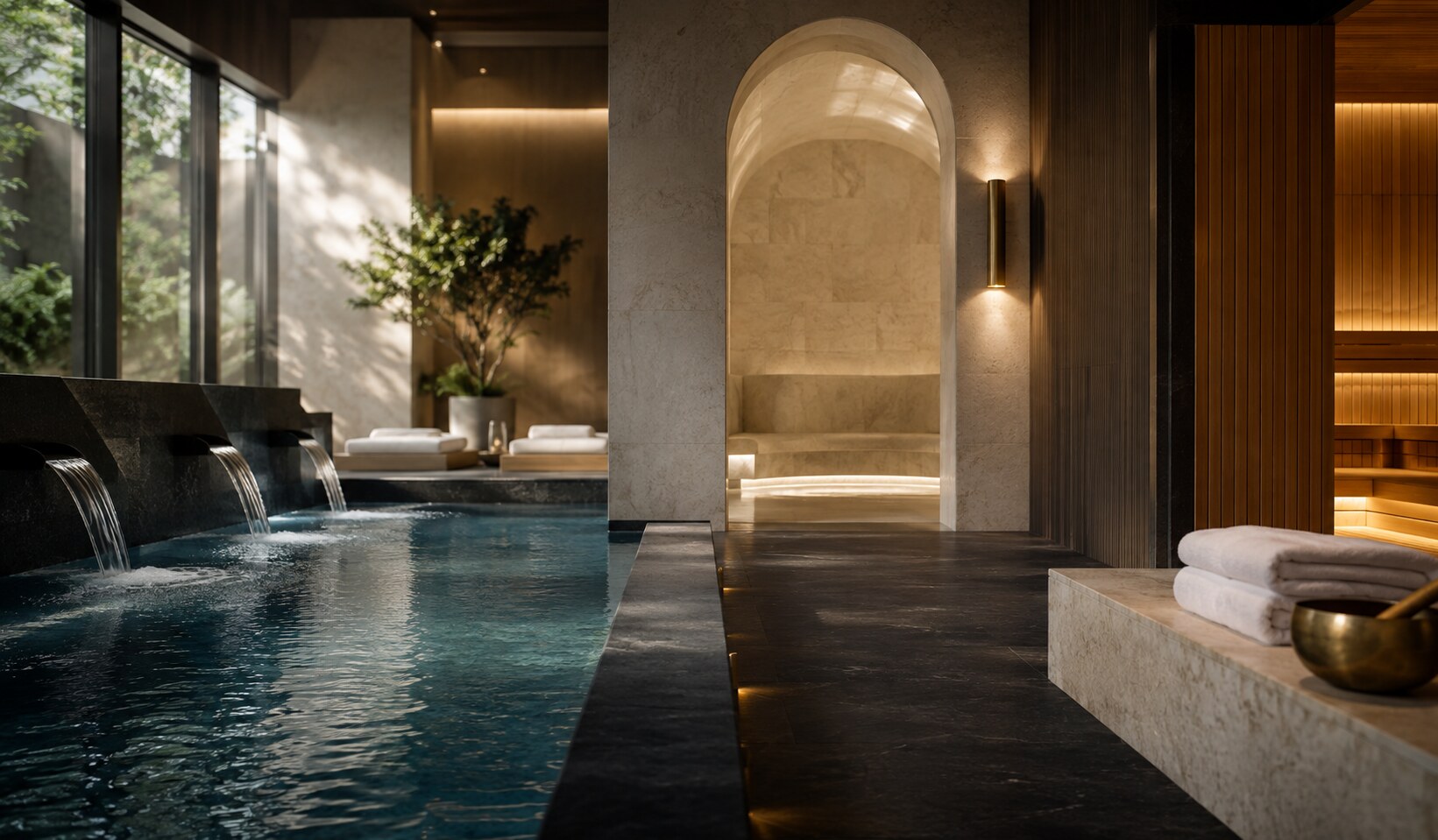
From affusion showers to Vichy tables, spa terminology can make it difficult to know what you are actually booking. This A–Z explains the most common facilities in plain English, what the experience usually involves and where sensible caution is needed.
Before you book
Facilities matter more than the length of the spa menu
Start with how you want to spend the day: swimming, thermal bathing, quiet recovery, movement or treatments. Then check access times, supervision, temperature, accessibility and whether facilities are shared.
“The best spa is not the one with the longest facilities list; it is the one whose spaces suit how you want to feel.”
A–Z of spa facilities
Aerobics studio
A room designed for instructor-led floor exercise, movement and conditioning classes. Ask whether mats and equipment are supplied and whether classes are included in your booking.
Affusion shower massage
A treatment delivered beneath a warm, rain-like shower, sometimes using seawater. The water may accompany a hands-on massage while you lie on a wet-treatment table. Also called an affusion or rain shower.
Aquamedic pool
A warm pool fitted with jets positioned at different heights. Guests usually move between stations for gentle water massage and relaxation; pressure and water temperature vary by spa.
Bath
A private soaking or cleansing ritual, sometimes prepared with salts, flowers, minerals or essential oils. It may be offered before or after another treatment. Tell the therapist about allergies or skin sensitivity.
Blitz shower
A traditional hydrotherapy treatment in which a practitioner directs a pressurised water jet towards the body from several metres away. It may also be called a douche au jet or jet massage. It is vigorous rather than relaxing and is not suitable for everyone.
Cold plunge pool
A small pool of cold water used after heat exposure or exercise. Sudden cold can raise heart rate and blood pressure and trigger breathlessness, so enter gradually, follow staff guidance and avoid it when medically unsuitable.
Crème bath
A hair-and-scalp conditioning ritual in which cream is applied section by section, sometimes followed by steam, rinsing and a neck, scalp or shoulder massage.
Dry flotation bed
A heated water-filled mattress that supports the body without direct contact with water. The sensation can encourage quiet relaxation, but claims that it treats pain, releases endorphins or produces a particular brain-wave state should not be assumed.
Floral bath
A bath prepared with flowers and, sometimes, essential oils. Its principal appeal is sensory and relaxing. Check ingredients if you have allergies, asthma or sensitive skin.
Gymnasium
A fitness room with cardiovascular and resistance equipment, free weights or functional-training space. Check staffed hours, induction requirements and whether spa guests have access.
Hair services
Salon services such as cutting, styling, conditioning, colouring, washing and blow-drying. These are often booked separately from spa treatments.
Hammam
A steam-bathing tradition associated with cleansing, warmth and social ritual. Historic hammams use connected rooms at different temperatures; modern hotel spas may offer a shortened therapist-led scrub and bathing sequence.
Hot plunge pool
A compact hot-water pool, often used as part of a thermal circuit. Prolonged heat may cause dehydration, dizziness or fainting; follow time limits and leave immediately if you feel unwell.
Hot tub
A heated soaking tub, usually with circulating water or jets. Water quality and maintenance matter because spa pools can harbour infectious organisms when poorly managed.
Hydrobath
A bath fitted with underwater jets. Water may contain mineral salts or aromatic ingredients. Jet pressure, temperature and added products should be adjusted for comfort and skin sensitivity.
Hydropool
A larger pool equipped with high-pressure jets, fountains or massage stations. It may be used for relaxation or gentle movement rather than conventional lap swimming.
Kneipp baths
A hydrotherapy tradition associated with Sebastian Kneipp, often using alternating warm and cool water alongside movement and wider lifestyle practices. Temperature contrast can be demanding; use gradual transitions and professional guidance.
Lap pool
A swimming pool arranged with lanes for continuous exercise. Many are 25 metres long, although hotel and spa pools vary considerably; check dimensions if training matters to you.
Mud pool
A bathing or self-application area using mineral or volcanic mud. The mud is allowed to dry before rinsing. Avoid broken or irritated skin and confirm ingredients and hygiene arrangements.
Onsen
A Japanese hot-spring bathing tradition. Etiquette usually includes washing before entering, bathing without swimwear and keeping towels out of the water. Rules vary outside Japan and tattoos may affect access at some venues.
Rasul or rasool
A self-applied mud ritual in a tiled steam chamber. Different muds are placed on the body before warmth, steam and a shower complete the sequence. It is often offered before massage.
Sauna
A wood-lined dry-heat room. Sauna use encourages sweating and may feel relaxing, but sweat is not evidence that the body is “detoxing.” Keep sessions moderate, hydrate, avoid alcohol and seek advice where pregnancy, cardiovascular conditions or medication affect heat tolerance.
Steam room
A humid tiled room filled with warm steam. It may soften the skin and feel relaxing, but it does not remove toxins or treat respiratory illness. Leave if you feel dizzy, faint or unwell.
Thermal bath
A pool or bath using naturally warm mineral-rich water, or a spa interpretation of thermal bathing. Mineral content and temperature differ by location; therapeutic claims require evidence beyond the presence of minerals.
Turkish bath
A sequence of hot and humid spaces, often combined with washing, scrubbing and a cooler finish. In some modern spas the term overlaps with hammam, so check what the booking actually includes.
Vichy shower
A row of overhead water jets that rains onto the body while you lie on a wet-treatment table, often during a scrub or massage. It is also called an affusion or rain shower.
Wet area
The collective term for water and thermal facilities such as pools, hot tubs, saunas, steam rooms, experience showers and cold areas. Ask whether the wet area is mixed, adult-only, accessible and included in your treatment price.
Whirlpool
A warm bath or pool with circulating jets. It can feel soothing after activity, but it should be clean, well maintained and used within the venue’s time and health guidance.
Thermal-area safety
- Hydrate, avoid alcohol and leave any facility if you feel dizzy or unwell.
- Enter cold water gradually; abrupt immersion can trigger cold shock.
- Pregnancy may increase overheating and fainting risks in saunas, steam rooms and hot tubs.
- Ask a clinician before hot/cold exposure if you have a heart condition, unstable blood pressure or medication affecting temperature regulation.
Our conclusion
Use facilities as a filter, not a checklist. A swimmer needs a genuine lap pool; someone seeking quiet may value a relaxation room more than a crowded thermal circuit; and a treatment-led visit may not require extensive wet facilities at all. Confirm the details directly because names, temperatures and access rules are not standardised.
Find the right facilities
Search by location and wellbeing priority, or ask the Concierge to turn your must-have facilities into a shortlist.
Spa-break partner
Compare UK spa escapes by facilities and setting
Affiliate disclosure: The Spa Traveller may earn a commission from qualifying bookings, at no extra cost to you. Facilities, access, prices and terms are controlled by the booking provider and venue.
Frequently asked questions
What is usually included in a spa wet area?
A wet area commonly includes a pool, sauna, steam room, hot tub or hydrotherapy pool and showers. Inclusion, age rules and mixed-gender arrangements vary, so confirm them before booking.
Do saunas and steam rooms detox the body?
No. They cause sweating and may feel relaxing, but sweating should not be described as removing toxins or treating illness.
Is a cold plunge suitable for everyone?
No. Sudden cold can sharply affect breathing, heart rate and blood pressure. People with heart conditions or other relevant health concerns should seek individual advice and follow venue guidance.
Can I use hot spa facilities during pregnancy?
Heat can increase the risk of overheating, dehydration and fainting during pregnancy. Seek individual maternity advice and check the venue’s temperature and access policy before use.
Wellbeing note: This guide explains facilities for general consumer planning and is not medical advice. Follow staff instructions and seek individual clinical guidance where health conditions, pregnancy or medication may affect suitability.