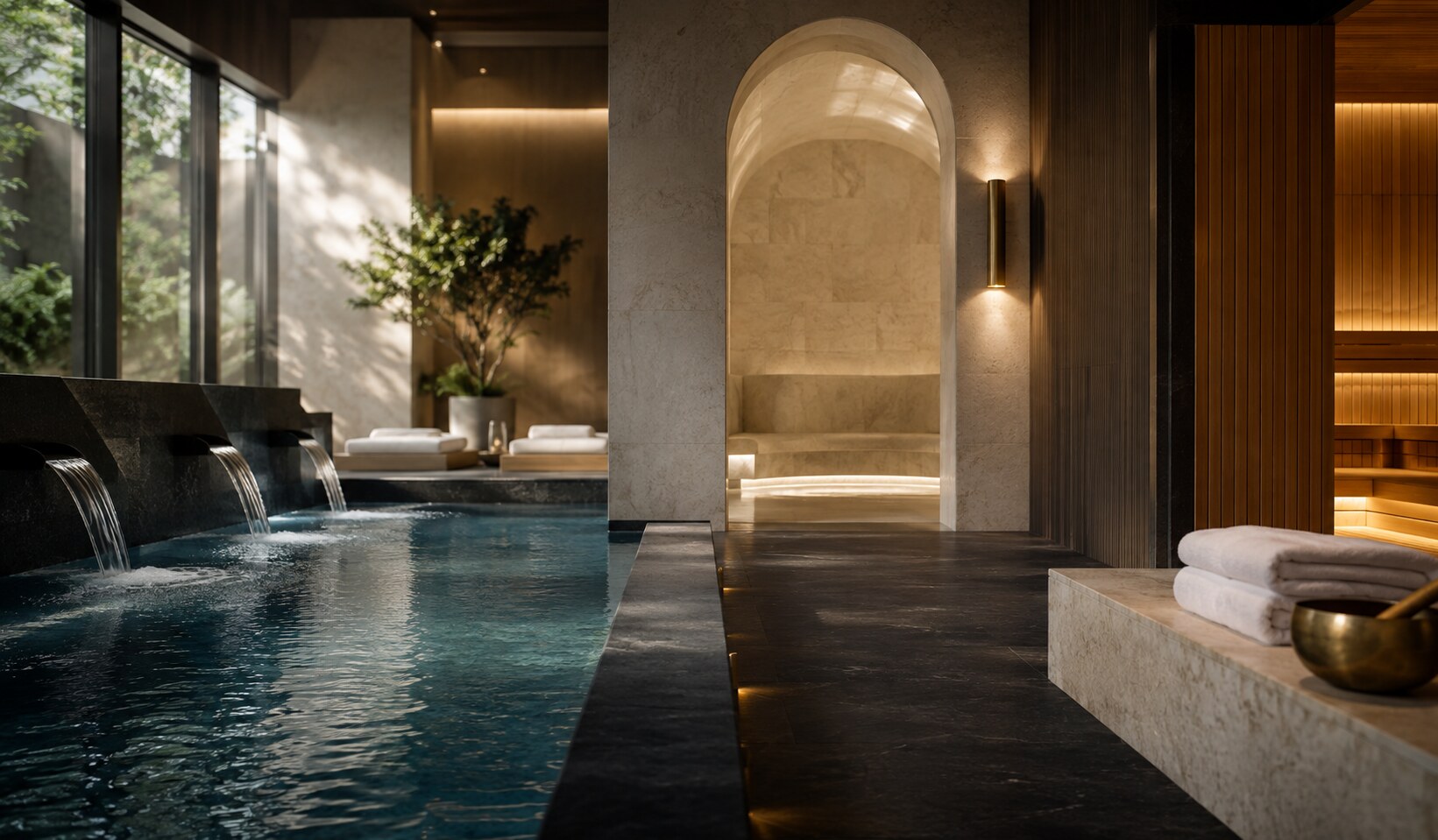
From cold plunges and hammams to hydrotherapy pools, rasul chambers and Vichy showers, this plain-English glossary explains what common spa facilities are—and what to check before using them.
Choose facilities by experience
- For warmth and stillness: consider a sauna, steam room, hammam or thermal bath, subject to your health and heat tolerance.
- For water movement: look for a hydropool, whirlpool, hydrobath or aquamedic pool.
- For hot-and-cold contrast: confirm temperatures, supervision and a gradual route between heat and a cool shower or plunge.
- For treatments: ask whether Vichy, affusion, rasul or dry-float experiences are therapist-led or self-guided.
- For exercise: compare pool length, gym equipment, studio timetable and accessible changing facilities.
A–Z of spa facilities
Aerobics or movement studio
A room used for group exercise such as yoga, Pilates, mobility, dance or conditioning. Check the timetable, class level, equipment and whether advance booking is required.
Affusion shower massage
A treatment in which warm water falls in a rain-like flow while massage or other bodywork is performed. The format varies, so confirm temperature, pressure, privacy and whether oils or exfoliants are used.
Aquamedic or hydrotherapy pool
A pool with jets positioned for different parts of the body. It may be used for gentle movement and relaxation; it should not be presented as treating a medical condition without appropriate clinical oversight.
Spa bath
A private or shared bathing experience using warm water, sometimes with mineral salts, flowers or fragranced oils. Check ingredients if you have sensitive skin or allergies and ask whether swimwear is expected.
Blitz shower or douche au jet
A strong directional water jet controlled by a trained practitioner from several metres away. Because pressure can be intense, disclose bruising, fragile skin, circulation concerns, pregnancy, recent surgery or acute injury before treatment.
Cold plunge pool
A small pool designed for brief cooling, often after heat. Cold immersion is not suitable for everyone and can provoke a rapid breathing and cardiovascular response. Enter gradually, follow venue guidance and do not treat extreme duration as a goal.
Crème bath
A hair-and-scalp conditioning ritual in which cream is applied section by section, sometimes with steam and neck, scalp or shoulder massage. Ask about ingredients, heat and finishing arrangements.
Dry flotation bed
A warm water-filled mattress supports the body without direct contact with water. It can create a weightless, restful sensation, but claims about pain relief, circulation or brainwave changes should not be treated as guaranteed outcomes.
Floral bath
A bath prepared with flowers and sometimes essential oils. Confirm which botanicals are used and request a fragrance-free alternative if appropriate.
Gymnasium
A fitness room with cardiovascular and resistance equipment, free weights or functional-training space. Look for staffed hours, induction requirements, equipment maintenance and accessible options.
Hair services
Salon services may include cutting, styling, colouring, deep conditioning and blow-drying. Check whether the salon is part of the spa, the products used and how it fits around wet facilities or treatments.
Hammam
A bathing tradition associated with warm rooms, steam, washing and exfoliation. Contemporary hotel-spa versions range from self-guided thermal rooms to therapist-led rituals, so ask exactly what is included and what to wear.
Hot plunge pool
A small hot-water pool intended for soaking. Check the stated temperature, limit exposure according to venue guidance, and seek individual advice if you are pregnant or have cardiovascular, blood-pressure or heat-sensitivity concerns.
Hot tub
A heated soaking tub, usually with moving water or jets. Good hygiene, temperature control and water testing matter; do not use if the venue advises against it because of illness, broken skin or another health concern.
Hydrobath
A bath fitted with water or air jets, sometimes combined with mineral salts or aromatic products. Ask how pressure and ingredients can be adapted.
Hydropool or vitality pool
A larger warm pool with jets, fountains, bubble beds or massage stations. Facilities vary considerably, so compare water depth, access steps or hoists, seating, temperature and supervision.
Kneipp circuit
A hot-and-cold water experience inspired by Sebastian Kneipp’s hydrotherapy approach, often using alternating foot or leg channels. Follow the venue sequence rather than improvising extreme temperature exposure.
Lap pool
A pool designed for continuous swimming. Many are 25 metres, but hotel-spa pools may be shorter. Confirm length, lane availability, family hours and whether swimming caps are required.
Mud experience
A self-application or therapist-led ritual using cosmetic mud, clay or mineral products before rinsing. Ask about ingredients, slip hazards, staining and allergy considerations. “Detox” and permanent body-shaping claims are marketing, not established outcomes.
Onsen
In Japan, an onsen is a bath using naturally hot spring water and is governed by local bathing etiquette. Outside Japan, the word may be used more loosely; check whether the water is genuinely geothermal and understand the venue’s washing, swimwear and tattoo policies.
Rasul or rhassoul
A steam-room ritual in which different cosmetic muds are applied to the body before rinsing. It may be private or shared and self-guided or hosted. Check products, timing, heat, privacy and shower access.
Sauna
A heated room, commonly wood-lined, with lower humidity than a steam room. Sauna can feel restorative, but sweating is not a special toxin-removal process. Hydrate, use manageable sessions and leave if you feel dizzy, unwell or excessively breathless.
Steam room
A warm, humid room with tiled seating. Steam does not “open pores” or eliminate toxins, but many guests enjoy the warmth and atmosphere. Check heat tolerance and avoid use when the venue or your clinician advises against it.
Thermal bath
A bathing pool supplied by naturally warm or mineral-rich water, although some spas use the term for heated pools more generally. Ask about water source, temperature, mineral content and recommended bathing time.
Turkish bath
A term often used interchangeably with hammam, though layouts and rituals differ. A sequence may include warm and hot rooms, washing, exfoliation and cooling. Ask the spa for its actual route rather than relying on the label.
Vichy shower
Several shower heads fixed above a treatment table create a continuous rain of water, often alongside exfoliation or massage. Confirm temperature, products, modesty arrangements and whether you need to bring swimwear.
Wet area
The collective term for pools, showers, saunas, steam rooms, experience showers and changing facilities. Check whether access is included with your booking and whether the area is mixed, single-sex or adults-only.
Whirlpool
A warm bath or pool in which jets circulate water around the body. Compare seating, depth, handrails, maximum capacity and hygiene controls.
A long facilities list is less useful than knowing what is included, how each space feels and whether you can use it comfortably.
The Spa Traveller
Six questions before you book
- Which facilities are included in the day, treatment or overnight rate?
- Are any pools or thermal rooms closed, timed or subject to advance booking?
- What are the temperatures, depths and access arrangements?
- Are there adults-only, family, mixed or single-sex sessions?
- What should I bring, and are robes, towels, footwear or lockers included?
- Can the spa accommodate mobility, sensory, pregnancy or health requirements?
Frequently asked questions
Do I need to use every spa facility?
No. Choose the spaces that suit your comfort, energy and health circumstances. More heat, cold or time is not automatically better.
Should I alternate sauna and cold plunge?
Contrast bathing is optional, not a test of endurance. Follow the spa’s guidance, cool gradually if preferred and stop if you feel unwell.
Are thermal and hydrotherapy pools the same?
Not necessarily. “Thermal” may describe naturally warm mineral water or simply a heated experience; “hydrotherapy” usually refers to water movement, jets or exercises. Ask the venue what it means.
How can I check accessibility?
Ask for specific details about parking, changing rooms, pool hoists, steps, handrails, door widths, quiet spaces and staff assistance. A general “accessible” label is not enough for every need.
Conclusion: compare the detail, not the facility count
A smaller spa with thoughtful access, well-managed temperatures and genuine quiet may suit you better than a vast thermal circuit. Use this glossary to decode the menu, then confirm current availability directly with the property before travelling.
Find facilities that fit your spa day
Search The Spa Traveller directory by place and experience, or compare clearly marked partner spa breaks.
Affiliate disclosure: The Spa Traveller independently creates its editorial guidance. We may earn a commission if you book through the clearly marked SpaBreaks.com link, at no additional cost to you.
Wellbeing notice: This glossary provides general information, not medical advice. Ask the venue and an appropriate clinician about individual health, pregnancy, medicine, mobility or temperature-sensitivity concerns.