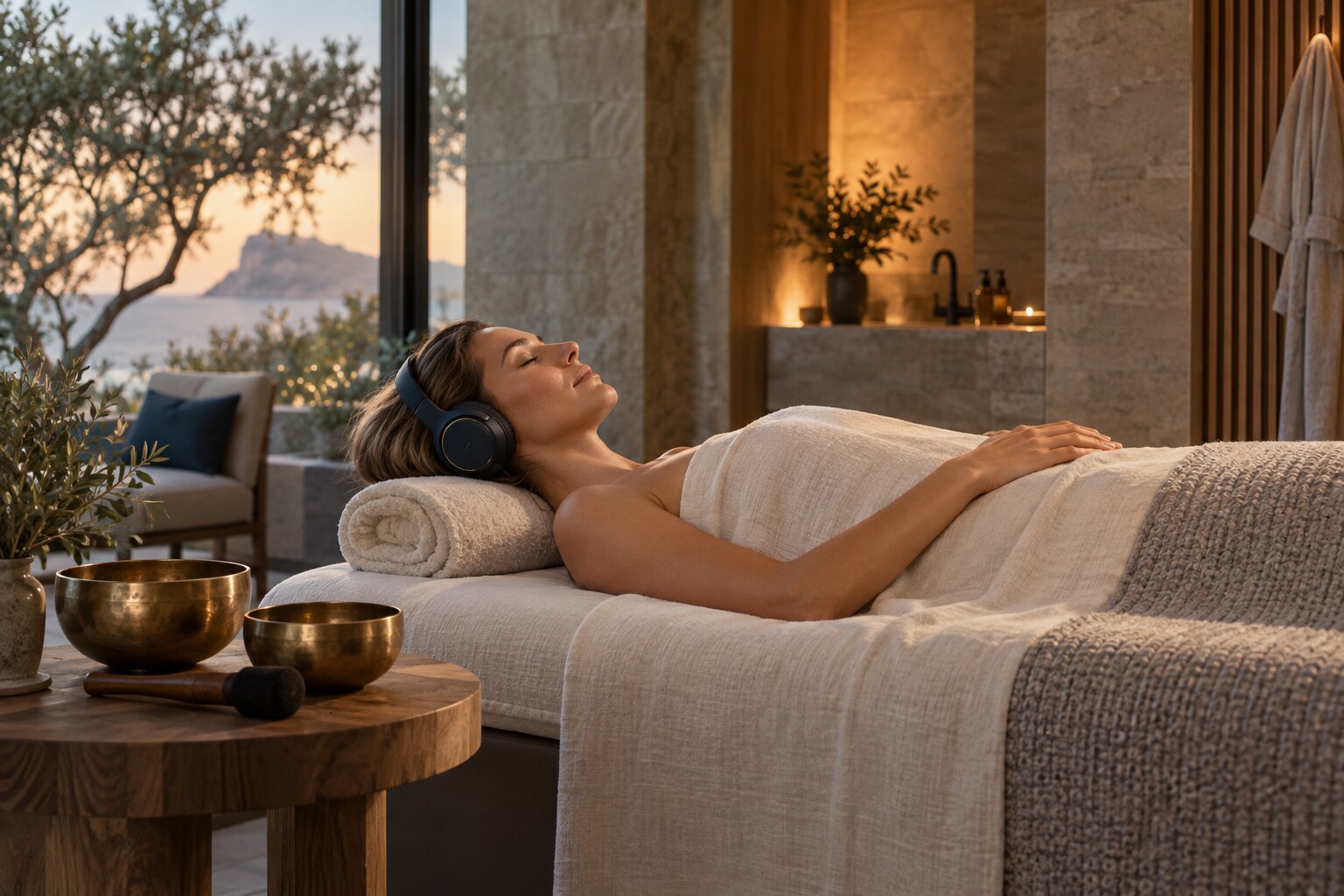
The Spa Traveller Guide · Sound & relaxation
From ambient soundscapes to a favourite familiar song, music can shape how a treatment feels. The useful question is not which playlist is universally “best”, but which sound helps you settle without becoming a distraction.
Many spas invite guests to choose their treatment music. Options may range from gentle instrumental pieces and nature sounds to familiar vocal tracks. The original Spa Traveller feature asked whether that choice mattered—and the answer is personal.
Start with preference, not prescription.
A track that feels calming to one guest can be irritating or emotionally charged for another. There is no single genre that guarantees relaxation, and music should never be presented as treating a cardiovascular or mental-health condition.
Why music can change the treatment experience
Music influences attention, expectation and emotion. In a treatment room, a steady, unobtrusive soundscape may make unfamiliar noises less noticeable, provide a sense of continuity and help some guests feel more comfortable during quiet periods.
Small studies have also examined short-term physiological responses to pleasurable or stressful music. An early University of Maryland research presentation associated self-selected joyful music with changes in flow-mediated dilation, a measure related to blood-vessel function. That finding was exploratory and does not establish that a spa playlist improves heart health.
Later clinical research has continued to investigate music alongside exercise or medical care, but its methods, participants and outcomes vary. These studies should not be translated into promises about what background music during a massage will do for an individual guest.
“The most restorative soundtrack is often the one you notice least: familiar enough to feel safe, gentle enough to leave room for stillness.”
How to choose music for a massage or facial
- Consider familiarity. Music you already enjoy may feel reassuring, but a favourite song can also trigger memories or invite you to follow the lyrics.
- Think about tempo. A slower, even rhythm often sits more comfortably beneath a quiet treatment than abrupt changes in pace or volume.
- Choose vocals deliberately. Instrumental music is less linguistically demanding; familiar vocals may feel warmer and more personal.
- Keep the volume low. You should still be able to hear the therapist’s instructions and communicate easily.
- Ask for silence. A soundtrack is optional. If quiet helps you relax, it is entirely reasonable to request it.
What to tell your therapist
Before the treatment begins, mention any sound sensitivity, hearing aid, tinnitus, migraine trigger or strong preference. Ask whether the volume can be changed during the session and agree on an easy way to communicate if the music becomes distracting.
A simple pre-treatment check
- Instrumental, nature sounds, familiar songs—or silence?
- Soft background sound or something more immersive?
- Are there genres, instruments or repetitive sounds you dislike?
- Would you prefer the music to stop during consultation or guided breathing?
The Spa Traveller view
Personalisation is most valuable when it removes friction. A thoughtful spa does not assume every guest relaxes to the same playlist; it offers a choice, sets an appropriate volume and makes it easy to change course.
Music may support the atmosphere of a treatment, but the essentials remain skilled practice, clear communication, comfort and enough time to settle.
Wellbeing notice: Music can affect mood and subjective relaxation, but it is not a medical treatment. Seek advice from an appropriately qualified healthcare professional for cardiovascular, hearing or mental-health concerns.